What it does for you
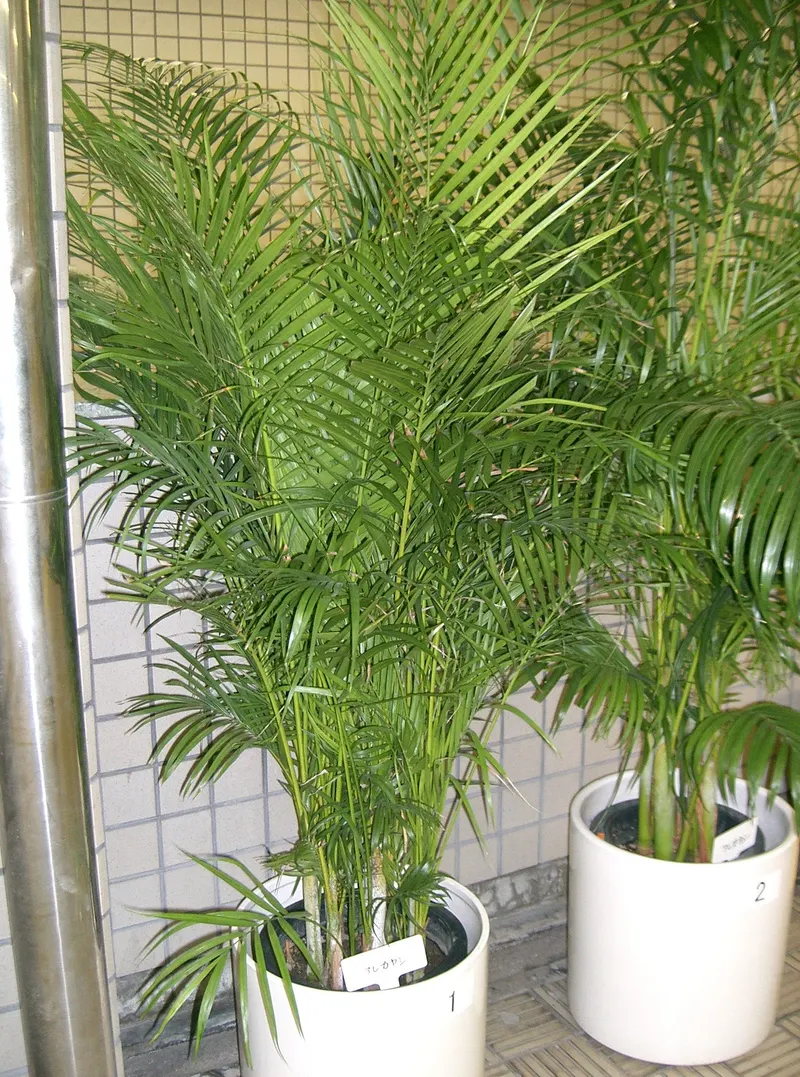
With its feathery, arching fronds and yellowish stalks, the areca palm brings the tropics into your room – it's one of the most popular indoor palms1. The ASPCA lists it as non-toxic for cats and dogs2, but NC State rates it as low in toxicity1 – more on that under Caution.
Origin & history
The areca palm only grows wild in eastern Madagascar5 – in dense clumps in forests, on sand dunes and along streams6. There its habitat is shrinking7. In many tropical countries, on the other hand, it has become naturalised5.
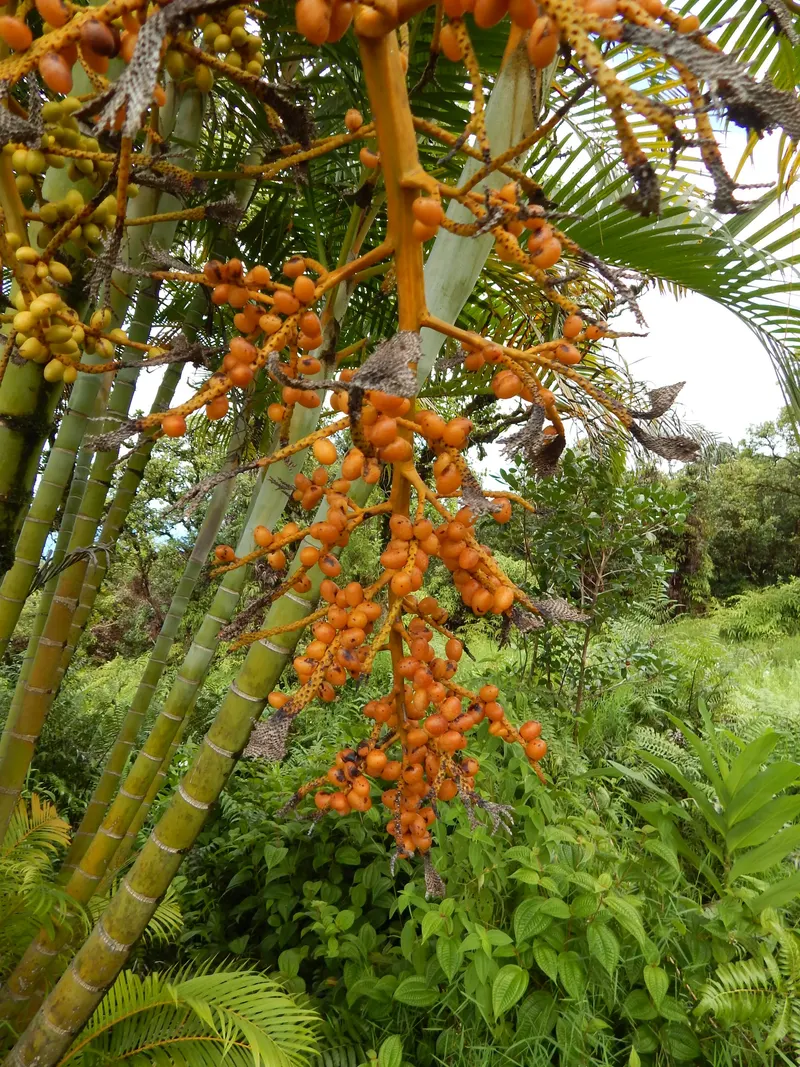
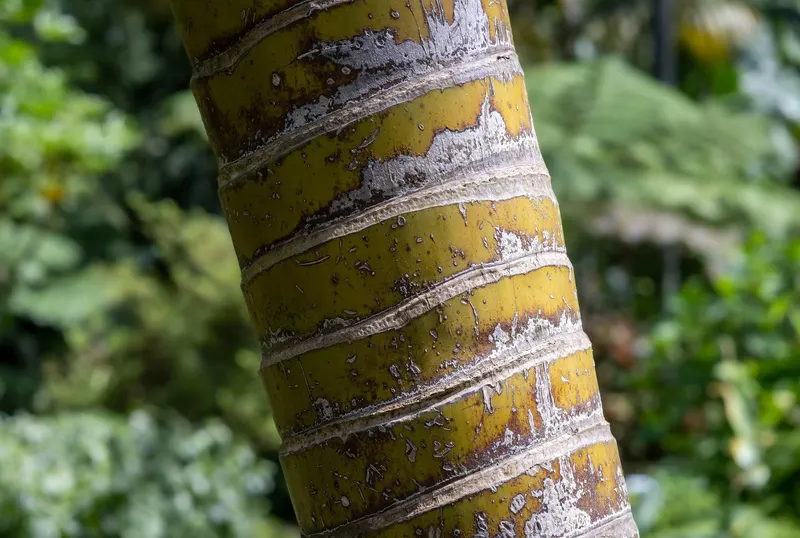
It was described in 1878 as Chrysalidocarpus lutescens, later called Dypsis lutescens – which is still often what the label says5. DNA analyses split the genus Dypsis up again in 2022; since then the old name applies once more8. Lutescens means "becoming yellowish" and suits the yellow leaf stalks7. The fruits are yellow to orange too1.
Caution
The ASPCA lists the areca palm as non-toxic for cats, dogs and horses2. NC State, however, rates its leaves and stems as low in toxicity (nausea, vomiting) and the palm heart – the growing tip with the young leaves – as cyanogenic (cyanide-releasing). Skin irritation isn't known1. The sources differ, so don't let pets or children chew on it.
Care
Light. It needs plenty of light6, but no harsh sun: bright and indirect, close to an east, west or south window9. In winter it can move closer to a south or west window6 (in the southern hemisphere, north instead of south).
Water. In summer the soil should never dry out, but the palm should never stand in water either; in winter let the surface dry out slightly6. Water thoroughly as soon as the surface is dry, and empty the saucer9 – as a rule of thumb once or twice a week in summer. Waterlogging makes the roots rot9.
Temperature & humidity. Ideal is 18–21 °C at night and 24–29 °C by day9, in winter never below 13 °C6. It likes high humidity1; in heated rooms a tray of damp gravel helps6. It is very prone to spider mites9.
Soil, pot & repotting. Peat-free houseplant soil or loam-based multipurpose compost6, open and rich in organic matter9. Repot every two to three years in spring, once the roots fill the pot – carefully, the roots are sensitive9. The RHS advises repotting every two years until it's in a 20–30 cm pot; in the years you don't repot, renew the top 5 cm of soil6.
Feeding. It is more sensitive to salt than most foliage plants – too much fertiliser makes the frond tips die back10. Recommendations range from every two weeks6 to two or three times a year9; as a rule of thumb, monthly and at low strength from spring to early autumn.
Extras
Indoors it grows about 1.8–2.1 metres tall and adds 15–25 centimetres a year. You can't shorten it, because every shoot only grows from its tip9. Cut old fronds off instead of tearing them6. Outdoors it grows up to eight metres tall and flowers yellow in summer11 – indoors rarely1.


Symptoms & help
| too little | too much | |||
|---|---|---|---|---|
| Water | Brown, dry leaf tips, fronds turn yellow. → Water thoroughly until water runs out at the bottom, pour off the excess. From now on, check as soon as the surface is dry. | Fronds turn brown, the roots rot. → Water less often, empty the cachepot. If it's rotting, repot in fresh, porous soil. | ||
| Light | Fronds turn yellowish or get scorched. → Move it out of the harsh midday sun or draw a net curtain. | |||
| Fertiliser | New fronds stay small and turn pale yellow, often between green veins. → From spring to early autumn feed monthly at low strength, with trace elements such as iron. | Frond tips die back brown. → Flush the soil thoroughly, then feed less. | ||
| Warmth | Reddish-brown, dead patches on the fronds – often after a draught or a cold spell. → Move it somewhere warmer, never below 13 °C, away from draughts. Cut off damaged fronds. |
Take it with you
- Plant cardFront and back in A6 landscape – print it and keep it next to the pot
- PDF ↓

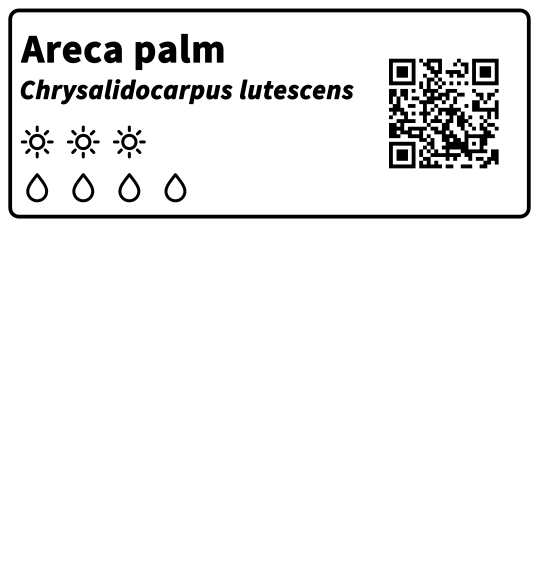
Notes on the files: Print & engrave
Licence and attribution for the plant labels: Readme (TXT)
Sources
- North Carolina State University Extension: Chrysalidocarpus lutescens. Extension Gardener Plant Toolbox. https://plants.ces.ncsu.edu/plants/chrysalidocarpus-lutescens/ (accessed 12 October 2026)
- ASPCA Animal Poison Control Center: Areca Palm (Dypsis lutescens). Toxic and Non-Toxic Plant List. https://www.aspca.org/pet-care/animal-poison-control/toxic-and-non-toxic-plants/areca-palm (accessed 12 October 2026)
- Wolverton, B. C., Johnson, A. & Bounds, K. (1989): Interior Landscape Plants for Indoor Air Pollution Abatement. NASA Technical Memorandum TM-101766. https://ntrs.nasa.gov/citations/19930073077
- Cummings, B. E. & Waring, M. S. (2020): Potted plants do not improve indoor air quality: a review and analysis of reported VOC removal efficiencies. Journal of Exposure Science & Environmental Epidemiology 30, 253–261. doi:10.1038/s41370-019-0175-9
- Royal Botanic Gardens, Kew: Chrysalidocarpus lutescens H.Wendl. Plants of the World Online. https://powo.science.kew.org/taxon/urn:lsid:ipni.org:names:665962-1 (accessed 12 October 2026)
- Royal Horticultural Society: Palms: indoors. RHS Advice. https://www.rhs.org.uk/plants/types/trees/indoor-palms (accessed 12 October 2026)
- Friedman, M. H., Andreu, M. G., Quintana, H. V. & McKenzie, M. (2010): Dypsis lutescens, Areca Palm. UF/IFAS Extension, Publication FOR247/FR309. https://edis.ifas.ufl.edu/publication/FR309 (accessed 12 October 2026)
- Eiserhardt, W. L., Bellot, S., Cowan, R. S., Dransfield, J., Hansen, L. E. S. F., Heyduk, K., Rabarijaona, R. N., Rakotoarinivo, M. & Baker, W. J. (2022): Phylogenomics and generic limits of Dypsidinae (Arecaceae), the largest palm radiation in Madagascar. Taxon 71(6), 1170–1195. doi:10.1002/tax.12797
- Russ, K. & Pertuit, A. (revised by Smith, B. H.) (2015): Indoor Palms. Clemson Cooperative Extension, Home & Garden Information Center. https://hgic.clemson.edu/factsheet/indoor-palms/ (accessed 12 October 2026)
- Poole, R. T., Chase, A. R. & Osborne, L. S.: Areca Palm Production Guide. UF/IFAS Central Florida Research and Education Center, Foliage Plant Research Note RH-91-6 (archived copy). https://web.archive.org/web/20151223122602/http://mrec.ifas.ufl.edu/Foliage/folnotes/areca.htm (accessed 12 October 2026)
- Royal Horticultural Society: Dypsis lutescens. RHS Plants. https://www.rhs.org.uk/plants/128311/dypsis-lutescens/details (accessed 12 October 2026)
- Berger, J., Essah, E. & Blanuša, T. (2024): The impact of plants on the humidity of naturally-ventilated office indoor environments. Journal of Building Engineering 86, 108814. doi:10.1016/j.jobe.2024.108814
- Royal Horticultural Society: How to take cuttings from houseplants. RHS Growing Guide. https://www.rhs.org.uk/plants/types/houseplants/how-to-take-cuttings-from-houseplants (accessed 14 October 2026)